
SMRAAD Powers Baicheng’s Industrial Zone with 30kW H-Type Vertical Axis Wind Turbines
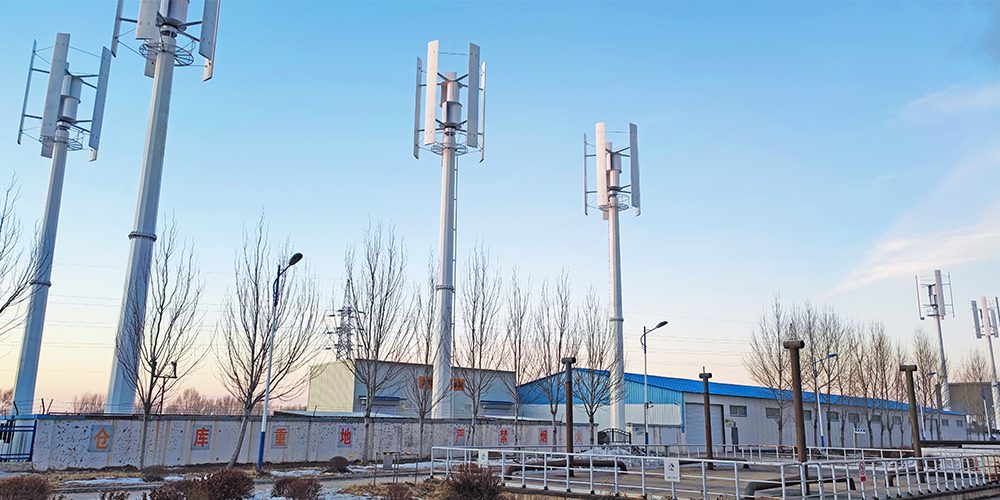
As dawn breaks over Baicheng’s industrial district, a row of sleek H-type vertical axis wind turbines stands tall against the pastel sky—marking the successful deployment of SMRAAD’s 30kW distributed grid-connected wind power system in late 2025. The photograph captures the project’s scale: six white, compact turbines integrated seamlessly with the zone’s warehouses and infrastructure, delivering reliable, on-site clean energy to local manufacturing operations.
Unlike horizontal axis models, these H-type vertical axis turbines are engineered for Baicheng’s unique conditions: their vertical design allows them to capture wind from any direction, eliminating the need for yaw mechanisms and ensuring efficient performance in the region’s variable, low-to-moderate wind speeds. Each 30kW unit features a modular, low-noise design, making it ideal for distributed industrial settings where space and noise constraints are critical.
The distributed grid-connected system is a game-changer for the Baicheng industrial zone. Collectively, the turbines are projected to generate ~85,000 kWh of electricity annually—enough to power 25 small factories or 60 rural households—while reducing carbon emissions by approximately 64 metric tons per year. By feeding excess power back into the local grid, the system also enhances energy resilience, mitigating the risk of outages for nearby businesses.
“Baicheng’s industrial landscape demands energy solutions that balance reliability, efficiency, and sustainability,” noted our on-site project manager. “These H-type turbines not only meet the zone’s immediate power needs but also demonstrate how distributed wind can transform industrial energy use—cutting costs, reducing carbon footprints, and supporting China’s Dual Carbon goals.”
This project underscores SMRAAD’s expertise in tailoring renewable energy solutions to diverse environments. By combining vertical axis technology with grid integration capabilities, we’ve created a scalable model for industrial zones across northern China, where wind resources are abundant but underutilized in distributed settings. As we expand our footprint in the region, this installation serves as a blueprint for a more sustainable, decentralized energy future.


